Lead Pipe Replacement Wolverhampton
Replacing outdated lead water supply pipes with safe, modern pipework across Wolverhampton
A permanent upgrade for older and unreliable water supply pipes
Professional Lead Pipe Replacement in Wolverhampton
Lead water pipes remain present in some older properties across Wolverhampton, particularly where the original incoming supply has never been fully renewed. A property may have modern internal plumbing while still receiving water through a lead pipe running beneath the front garden, driveway, floor or route between the boundary and the internal stop tap.
MJY Utilities provides professional lead pipe replacement in Wolverhampton for homeowners, landlords, commercial property owners and managed buildings. We replace outdated lead supplies with modern pipework designed to provide a safer, stronger and more dependable connection to the water network.
Wolverhampton has a broad mixture of housing. Established terraces around Bilston and Wednesfield sit alongside larger period properties in areas such as Tettenhall, Compton and Penn, while Bushbury, Oxley, Pendeford and other parts of the city include a combination of post-war housing and newer developments. The age, route and material of the incoming supply can therefore vary considerably between neighbouring properties.
Some lead pipes remain hidden because only part of the plumbing system has been upgraded. Copper or plastic pipework may be visible inside the building, but an older lead section can still remain underground. During an initial assessment, we consider the likely pipe route, accessible connections and the age of the property before planning the replacement.
Replacing lead pipework removes an outdated material from the drinking water supply. It can also resolve wider issues associated with ageing pipes, including restricted flow, weak pressure, corrosion, underground leaks and previous temporary repairs. A new supply gives the property a more suitable foundation for modern kitchens, bathrooms, boilers and appliances that place greater demand on the water system.
Our aim is not simply to disconnect a short visible section. We plan the work so the replacement addresses the relevant incoming supply and delivers a reliable long-term result.
Recognising when an older supply is no longer suitable for the property
Are Lead Pipes Dangerous?
Many property owners only discover lead pipework during renovations, plumbing alterations or work around the external stop tap. Others begin investigating after experiencing low water pressure, unusual water quality concerns or repeated leaks on an ageing underground supply.
Lead is generally recognisable as a dull grey material that is softer than copper or steel, but identifying one visible section does not always confirm the full route. Properties that have been altered over several decades can contain a combination of lead, copper, alkathene and modern plastic pipework. An assessment helps establish what needs replacing rather than assuming the whole system is made from one material.
Replacement is particularly worth considering when preparing a property for renovation or sale. New bathrooms, extensions and multiple outlets can expose the limitations of narrow older supplies. Upgrading the incoming pipe at the same time can improve overall flow and reduce the likelihood of the original service failing after internal improvements have already been completed.
Repeated leaks are another warning that replacement may offer better value than continued repair. A lead pipe that has failed in one location may have weakened elsewhere along its route. Digging up and patching individual sections can become increasingly disruptive, especially if the supply passes beneath a finished driveway, landscaped garden or part of the building.
Modern Lead Pipe Replacement Methods
A lead pipe replacement begins with planning the route of the new water supply. The most suitable option may follow the existing line, bypass an inaccessible section or create a more direct connection between the boundary and the building. Access, ground conditions, other underground services and the surfaces above the pipe all influence the installation method.
Modern blue MDPE pipework is commonly used for underground drinking water supplies. It is flexible, corrosion-resistant and designed for long-term use below ground. The size of the new supply is selected according to the property and expected water demand rather than automatically matching a narrow older lead pipe.
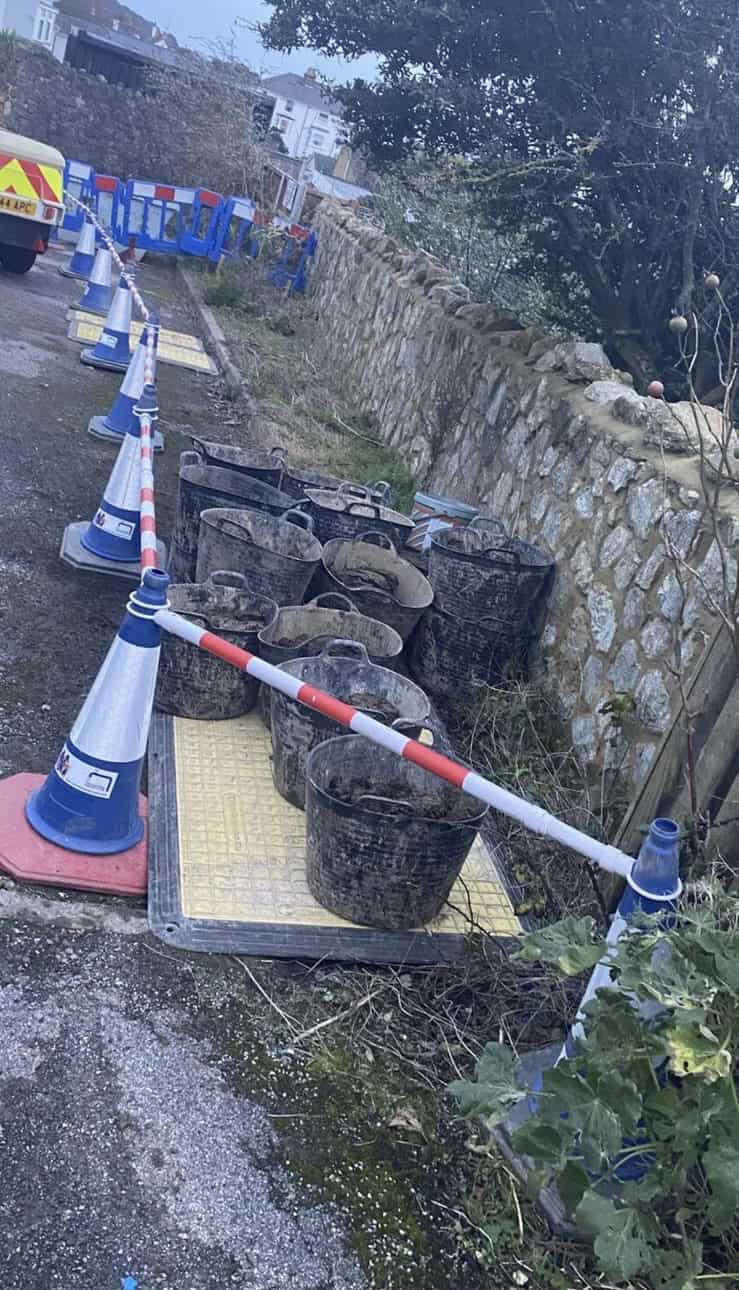
Where the route is straightforward, sections of open excavation may provide the most practical installation method. Trenches are carefully planned to expose the required connection points and allow the new pipe to be installed at the correct depth.
For suitable properties, MJY Utilities can also use impact moling to reduce the amount of continuous excavation required. This trenchless technique creates a controlled underground path between small launch and reception excavations, allowing new pipework to be installed beneath areas such as:
- Driveways and paved frontages
- Lawns and established gardens
- Paths and pedestrian access
- Patios and landscaped areas
- Commercial yards and hardstanding
- Sections where an open trench would cause excessive disturbance
Reduced-dig installation can be particularly useful around established Wolverhampton properties with long front gardens, mature landscaping or extensive paved areas. It can also help commercial premises where access routes need to remain usable.
Impact moling is not automatically appropriate for every site. Existing utilities, difficult soil, restricted access and the required pipe route must all be considered first. In some cases, a combination of moling and targeted excavation provides the best balance between access, safety and surface protection.
The old lead pipe does not always need to be physically pulled out along its entire route. Where appropriate, it can be safely disconnected and abandoned while a new compliant supply is installed separately. This avoids disturbing large areas simply to retrieve pipework that is no longer connected.
When Should a Lead Water Pipe Be Replaced?
You should consider a professional lead pipe replacement where:
- The property was built before modern plastic supply pipes became standard.
- Lead pipework has been found near the stop tap or property boundary.
- Previous plumbing work replaced only the visible internal section.
- Water pressure or flow is consistently poor.
- The underground supply has developed repeated leaks.
- Renovation, extension or driveway work provides an opportunity to upgrade the pipe.
- The existing supply is narrow, damaged or follows an impractical route.
- You want to remove lead pipework from the drinking water system.
Properties with shared water supplies may require additional planning. Some older terraces and former estate layouts around Wolverhampton were constructed with one incoming pipe serving several homes. Before replacement begins, it is important to understand whether the pipe serves only one address and where responsibility changes along the route.
Commercial and converted properties can also contain older connections that no longer match present-day water demand. Upgrading the supply can provide greater reliability for staff facilities, kitchens, washrooms, tenant spaces and other frequently used outlets.





Get a free quote along with professional advice
In need of our help?