
Common Causes of Burst Pipes and How Homeowners Can Avoid Emergency Repairs
Common Causes of Burst Pipes and How Homeowners Can Avoid Emergency Repairs
A burst pipe is one of those problems no homeowner wants to deal with. It often happens without warning, causes immediate disruption, and can lead to significant water damage in a very short space of time. While burst pipes are often associated with cold weather, the reality is that many failures are caused by issues that have been developing quietly for years.
Across Coventry, MJY Utilities regularly attends properties where a burst pipe could have been avoided with earlier intervention. Understanding why pipes fail and knowing the warning signs can help homeowners take action before a small issue turns into an emergency.
This blog explains the most common causes of burst pipes, why they happen when they do, and what you can do to reduce the risk.
Why Pipes Burst in the First Place
Pipes don’t usually fail suddenly without reason. In most cases, bursting is the final result of long-term stress on pipework. Pressure, corrosion, movement and temperature changes all play a role.
Once a pipe has weakened, it doesn’t take much for it to give way.
Cold Weather and Freezing Conditions
Cold weather is one of the most well-known causes of burst pipes. When temperatures drop, water inside pipes can freeze and expand. This expansion puts pressure on the pipe walls, especially in older or already weakened pipes.
Even when pipes don’t freeze completely, repeated freezing and thawing can weaken joints and create cracks over time. When temperatures rise again, water pressure increases and the pipe can burst at its weakest point.
Pipes that are shallow, poorly insulated or already damaged are most at risk during colder months.
Aging and Deteriorated Pipework
Many homes are still supplied by pipes that were installed decades ago. Over time, materials degrade. Pipes can corrode internally, thin out, or become brittle.
Older pipes often narrow from the inside as corrosion or mineral build-up reduces the internal diameter. This increases pressure within the pipe, making failure more likely.
Aging pipes are one of the biggest contributors to burst water mains and supply pipe failures.
Hidden Leaks That Go Unnoticed
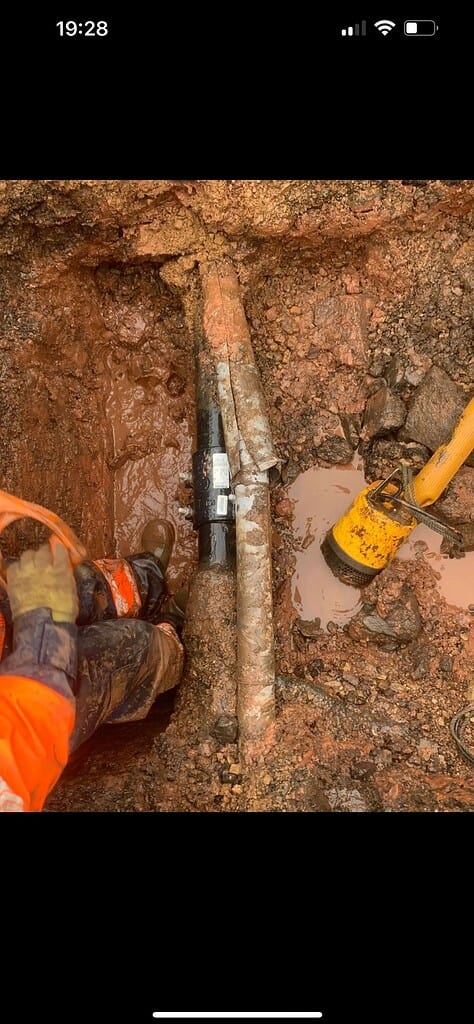
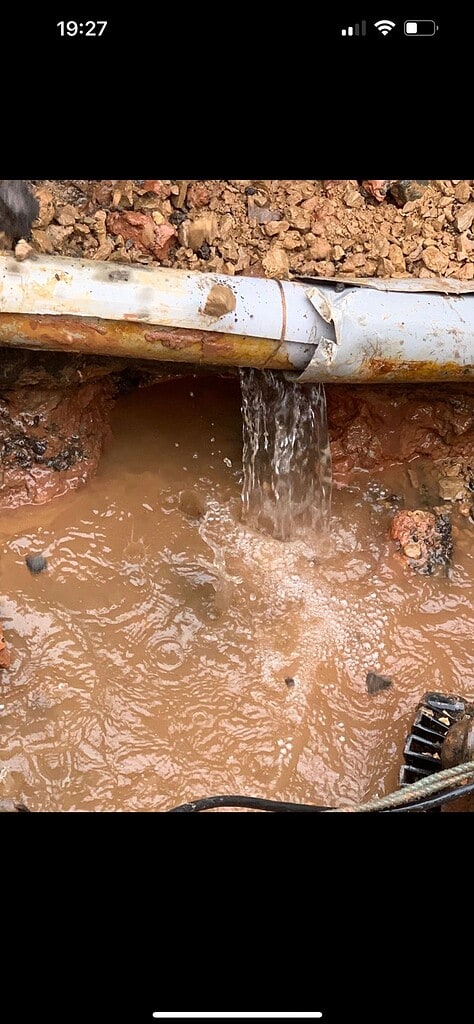
Small leaks are a major warning sign, but because supply pipes are underground, they often go undetected. A slow leak weakens the surrounding soil and the pipe itself, gradually undermining its structural integrity.
As the leak worsens, pressure within the system changes. Eventually, the pipe reaches a point where it can no longer cope and fails completely.
Many burst pipes are discovered only after months or even years of unnoticed leakage.
Ground Movement and External Stress
Pipes sit beneath soil that is constantly shifting. Seasonal changes, heavy rainfall, drought conditions, nearby construction work or even regular traffic vibration can all cause ground movement.
Over time, this movement places stress on underground pipes. Joints can loosen, pipes can crack, or sections can shift out of alignment. Once the structure of the pipe is compromised, a burst becomes far more likely.
High Water Pressure
High water pressure puts constant strain on pipework. While the effects may not be immediately obvious, long-term pressure can weaken joints and fittings.
If pressure fluctuates regularly, the stress on the pipe increases. Combined with aging materials or minor damage, this can lead to sudden failure.
Poor-Quality or Outdated Materials
Some older supply pipes were made from materials that simply don’t stand the test of time. Lead, steel and early plastic pipes are far more prone to corrosion, cracking and collapse than modern materials.
These pipes may function for years before failing, but when they do, the damage can be sudden and severe.
Warning Signs a Burst Pipe May Be Coming
Burst pipes rarely happen without warning. Homeowners often notice changes beforehand but don’t always connect them to a developing issue.
Common warning signs include:
A gradual or sudden drop in water pressure
Unexplained increases in water bills
Damp patches or pooling water outside
Discoloured water from taps
Noises of running water when taps are off
Repeated minor leaks or repairs
If any of these signs appear, it’s worth investigating sooner rather than later.
Why Emergency Repairs Are So Disruptive
When a pipe bursts, water escapes rapidly and can cause damage to gardens, driveways, foundations and even the inside of the property. Emergency repairs often require urgent excavation, which means more disruption and higher costs.
In contrast, planned repairs or replacements allow for better preparation, less mess and more control over the work.
How Homeowners Can Reduce the Risk
While not all pipe failures are preventable, there are practical steps homeowners can take to reduce the risk.
Keeping an eye on water bills and pressure changes is a simple but effective habit. Acting quickly when something doesn’t feel right can prevent escalation.
Older properties benefit from professional leak detection and pipe assessments, even when no obvious problem is present. Identifying weaknesses early allows for targeted repairs or planned upgrades rather than emergency call-outs.
Replacing outdated supply pipes before they fail is one of the most effective ways to avoid burst pipes altogether.
Why Modern Solutions Make Prevention Easier
Many homeowners delay pipe upgrades due to fear of disruption. Modern no-dig replacement methods have removed much of that concern.
Today, supply pipes can often be replaced with minimal excavation, avoiding damage to gardens, paths and driveways. Work is usually completed quickly, making proactive upgrades far more realistic than they once were.
Prevention Is Always Better Than Emergency Repairs
Burst pipes are stressful, expensive and disruptive. In most cases, they’re also avoidable.
Understanding the causes, recognising early warning signs and taking proactive action can save homeowners significant time, money and hassle. A professional assessment doesn’t just fix problems, it helps prevent them.
If your property has older pipework or you’ve noticed changes in pressure or performance, addressing the issue early is the best way to protect your home and avoid emergency repairs down the line.

Do you need help from our experts?
Give us a call today to get expert advice and support from our experienced team.
Get a free quote along with professional advice
In need of our help?