
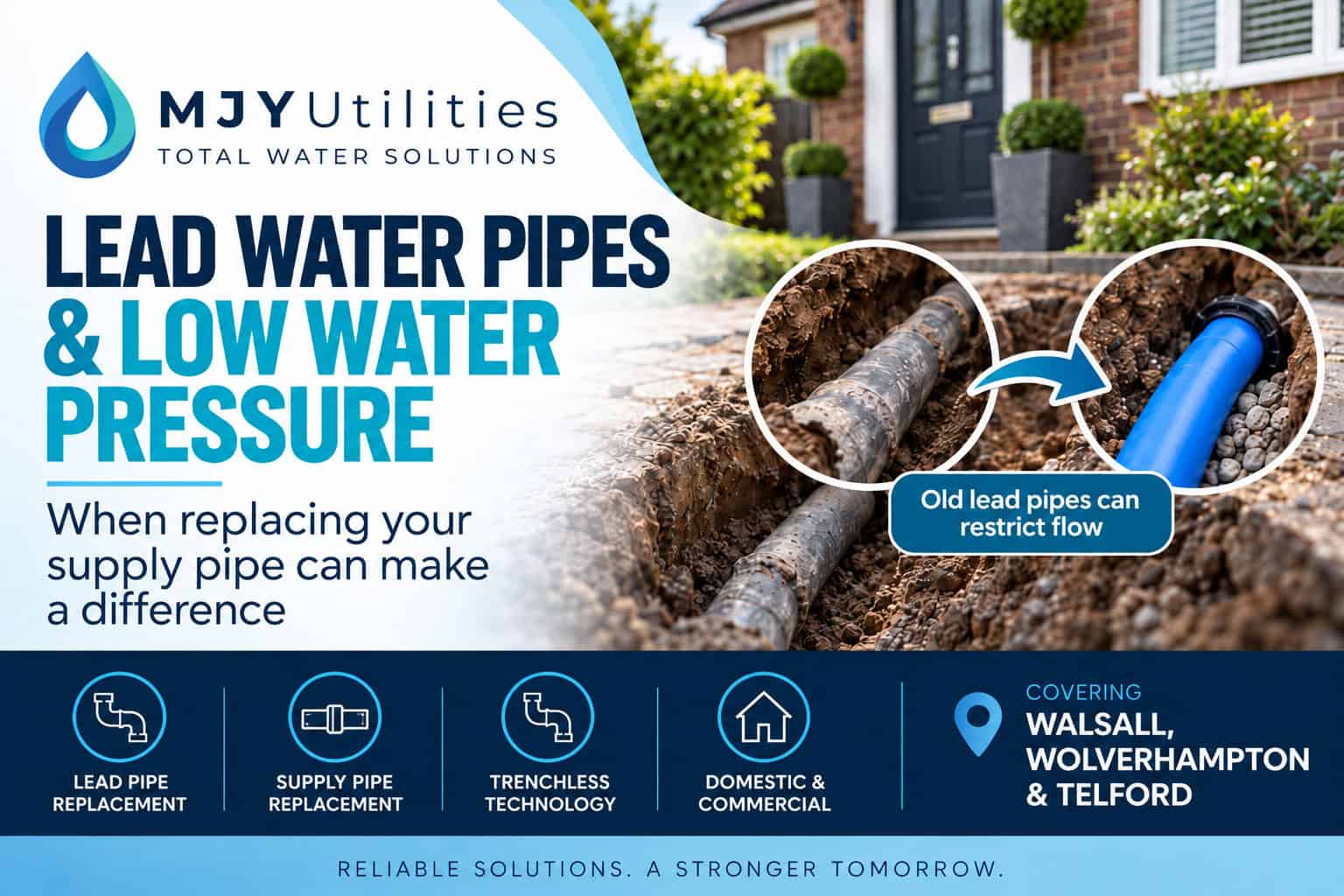
Lead Water Pipes and Low Water Pressure: When Replacing Your Supply Pipe Can Make a Difference
If you’ve lived in an older property for years, you might have become used to a shower that isn’t particularly powerful or taps that take longer than expected to fill the sink. It’s easy to put these things down to the age of the house or assume there’s not much you can do about them.
However, the problem isn’t always inside your bathroom or kitchen. Sometimes, it’s the underground pipe bringing water into your property.
Many older homes across Walsall, Wolverhampton and Telford may still have original lead water supply pipes. Although these pipes can remain in service for decades, their condition and size can affect how much water reaches your home.
Replacing an old lead supply pipe with modern pipework can sometimes make a noticeable difference, especially where the existing supply is restricted, damaged or shared with neighbouring properties.
Can Lead Water Pipes Cause Low Water Pressure?
Yes, although it’s important to understand that lead itself doesn’t automatically cause low water pressure.
The main issue is often the size and condition of the pipe. Older lead supply pipes can have a relatively narrow internal diameter compared with modern replacement pipework.
When several taps or appliances are being used at once, a restricted supply may struggle to deliver enough water.
For example, you might notice that the shower becomes weaker when someone turns on the kitchen tap. The washing machine might take longer to fill, or the flow from upstairs taps may be noticeably poorer than downstairs.
A leak in the underground supply pipe can also contribute to reduced water pressure.
These are all reasons to investigate the incoming supply rather than automatically blaming internal plumbing.
MJY Utilities provides low water pressure investigations to help identify whether the issue is related to underground pipework, internal plumbing or another part of the water supply.
How Do You Know If Your Home Has Lead Pipes?
Lead water pipes were commonly installed in UK properties before 1970, although some older homes have since had their supplies upgraded.
If you own an older property in areas such as Bloxwich, Willenhall, Aldridge, Bilston, Wednesfield or Tettenhall, it’s worth checking what material your incoming supply pipe is made from.
The same applies to older housing around Wellington, Madeley and Oakengates in Telford.
One place to look is where the water supply enters the property, usually near the internal stop tap. Lead pipework often has a dull grey appearance and may have thicker, rounded joints.
However, much of the supply pipe will be underground, so it isn’t always possible to confirm the material by looking inside the house.
If you’re unsure, a professional inspection can help establish what you’re dealing with.
Why Replacing Lead Pipes Is About More Than Water Pressure
Although improved water flow is a common reason homeowners consider upgrading their supply, there’s another important consideration.
Lead can enter drinking water after it has been in contact with lead pipework. This is why replacing old lead pipes is recommended, particularly in properties where the original water supply has never been modernised.
The Drinking Water Inspectorate’s guidance on lead in drinking water explains the risks associated with lead pipework and why replacement is the preferred long-term solution.
If you suspect your property has lead pipes, you can also contact your water supplier for advice about testing your drinking water.
When Is Replacing the Supply Pipe Worth Considering?
Not every property with poor water pressure needs a complete replacement.
Sometimes the problem is a faulty valve, a restriction in the internal plumbing or pressure fluctuations within the wider water network.
However, replacing the supply pipe may be worthwhile if the existing pipe is made from lead, has developed repeated leaks or is too narrow to meet the property’s water requirements.
Shared supplies can also cause problems. Some older terraced and semi-detached properties receive water through a pipe serving more than one home.
If several households use water at the same time, the available flow may drop considerably.
Installing a dedicated modern supply pipe can reduce this reliance on neighbouring usage, although the improvement will depend on the incoming network pressure and the design of the new connection.
Can Lead Pipes Be Replaced Without Digging Up the Driveway?
One of the biggest concerns homeowners have about water main replacement is the disruption.
Nobody wants to invest in a new driveway, patio or landscaped garden only to have it dug up because of an underground pipe.
Fortunately, a full-length trench isn’t always necessary.
MJY Utilities uses modern trenchless installation methods where suitable, including impact moling.
This involves creating a route beneath the ground for the new pipe, usually working between smaller access points rather than excavating the entire length.
It’s particularly useful for properties with block paving, established gardens, paths and other finished surfaces.
Not every property is suitable for moling, so ground conditions, existing utilities and access need to be assessed before work begins.
What Happens During a Lead Supply Pipe Replacement?
The first step is finding out where the existing pipe runs and whether replacement is the most appropriate solution.
The team can then assess the length of the supply, access points, ground conditions and the proposed route for the new pipe.
In most cases, the replacement will use modern MDPE pipework suitable for underground drinking water supplies.
The installation needs to be connected and tested correctly, with the old lead supply taken out of service. Coordination with the water company may also be needed, particularly where its side of the connection contains lead.
MJY Utilities offers lead water pipe replacement for homeowners, landlords and businesses, with the aim of keeping excavation and disruption to a minimum.
Getting Your Water Pressure Checked in Walsall, Wolverhampton and Telford
Low water pressure can be frustrating, especially when it affects several parts of the house.
But replacing taps, shower heads or internal fittings won’t solve the issue if the problem starts with the underground supply pipe.
For older properties across Walsall, Wolverhampton, Telford and surrounding areas, investigating the supply pipe can help establish whether ageing lead pipework, restricted flow or an underground leak is contributing to the problem.
It also gives homeowners the opportunity to remove outdated lead pipes and improve the long-term reliability of their water supply.
If you’re concerned about poor pressure or suspect your property still has an original lead connection, MJY Utilities can assess the situation and explain your options.
Give MJY Utilities a call today to discuss lead pipe replacement and water pressure problems across the West Midlands.
Do you need help from our experts?
Give us a call today to get expert advice and support from our experienced team.
Get a free quote along with professional advice
In need of our help?